
Paella in Tarragona

Today, I’m taking you along as I make an authentic paella at home, using fresh ingredients from Tarragona. And at the end of this blog, I’ll also share a few restaurant recommendations for where to enjoy a good paella in Tarragona.

And because Tarragona is a true port city with a thriving fishing industry, I’m going for a paella de marisco: a paella with fish and seafood. Purists may argue that only a Valencian paella should really be called paella, but I think a seafood paella is still allowed (as long as you don’t put chorizo in it 😊). Paella is traditionally eaten for lunch, preferably on a Sunday with family and friends.
But let’s start at the beginning: first, we need to do some shopping. So we’re heading into Tarragona.
Step 1: Shopping in Tarragona
A good dish stands or falls by the quality and freshness of its ingredients. And that’s especially true when it comes to fish and seafood. That’s why I head to the Mercat Central on Plaça Corsini, just a few minutes’ walk from the Rambla Nova. Here you’ll find several fish stalls next to each other, offering a fantastic selection of fresh fish and seafood.
For this paella, I’ve chosen monkfish (rape), cuttlefish (sepia), langoustines (cigalas), prawns (gambas), mussels (mejillones, not farmed, but harvested from the rocks) and clams (almejas). I also asked for a bag of fish scraps (fish heads and bones) to make my own fresh fish stock. Not only did I get them for free, they also cleaned them for me (the gills and blood need to be removed, otherwise the stock can become bitter).
I had already bought the rice (Valencian bomba rice!), saffron, tomatoes, garlic, olive oil, paprika, salt and lemon at Mercadona.
Step 2: Making the stock
First, we make a fresh fish stock. The secret to a good paella is that the rice absorbs the flavour of the stock, which gives it that wonderful, rich taste. So no stock cubes here — we’re going for the real thing. I bring about 2–3 litres of water to the boil and add the fish scraps.
Meanwhile, I gently fry some tomato, onion and garlic with paprika. I add this to the stock together with some parsley. Let the stock simmer for about 20–25 minutes in total. Not much longer, as it can start to become bitter.
Step 3: Getting everything ready & adding the olive oil
I like to have everything completely prepared and chopped before I start cooking, so once the paella pan is on the heat, all I have to worry about is the timing. And that leaves me time to talk to my guests, friends and family. Making paella is a bit like having a barbecue: the pan becomes a central gathering point where everyone stands around chatting.
I place the paella pan level on the special paella gas burners (pour some olive oil into the centre of the pan and check that it doesn’t run to one side) and turn on the burners. I put two cloves of garlic into the oil to check when it’s hot enough. Once it is, take the cloves out and simply eat them (by then, they’ve lost their sharpness).
Step 4: Before adding the stock

First, I add the langoustines and prawns to the pan and cook them in the hot oil for a few minutes. Don’t leave them in for too long, as langoustine meat can quickly become dry. Take them out of the pan and set them aside.
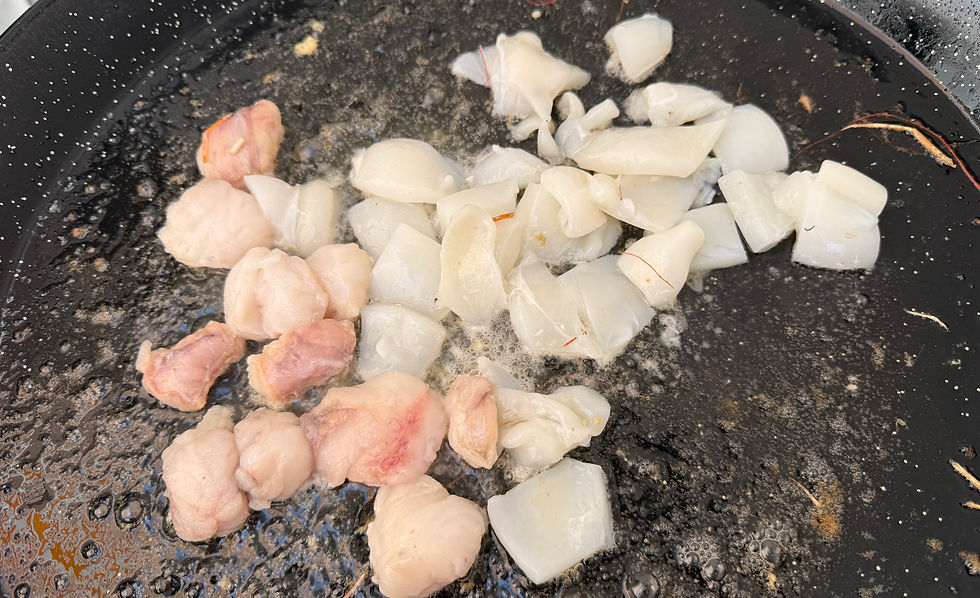
Next, add the cuttlefish and monkfish to the pan and cook until they start to develop a nice colour.
Move the fish to the edges of the pan and add the tomato and garlic. Let the juices mix well with the olive oil. Then do the same with the paprika. The idea is to let everything caramelise together with all the oil and juices already in the pan.
Next, add the rice, mix everything together thoroughly and cook it for a few minutes so that the rice absorbs all those flavours from the pan.
Step 5: Adding the stock and finishing the paella
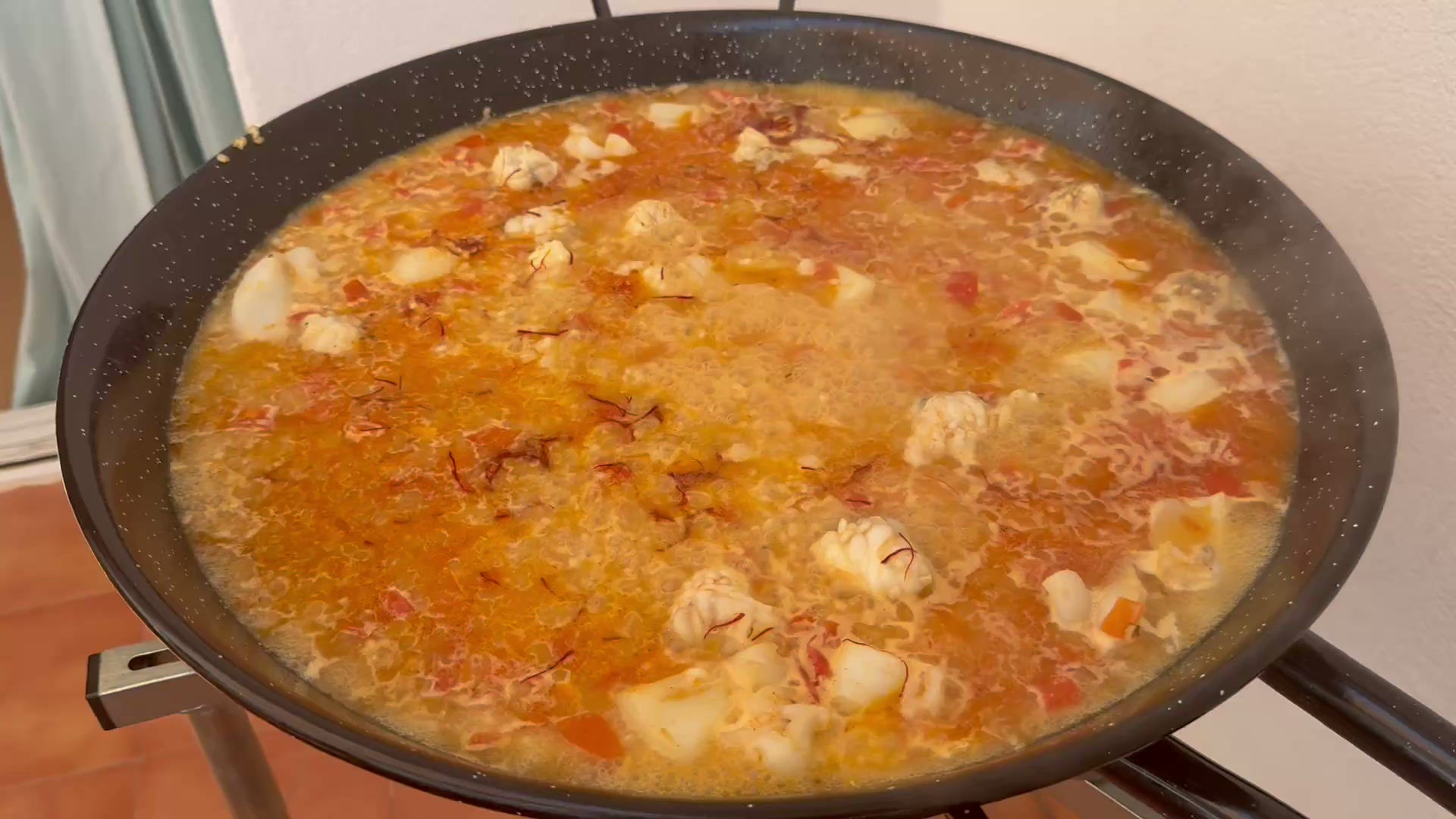
Now add the stock. Make sure the stock is hot, but not boiling. Then add the saffron threads and salt. Cook everything over high heat for the first 5 minutes, then reduce the heat and cook for another 10 minutes.

About 5 minutes before the end, add the langoustines, prawns, mussels and clams. As the rice absorbs the remaining liquid, the seafood will cook. Discard any mussels or clams that don’t open.
Important: once you turn off the heat, leave the paella to rest for another 5–10 minutes. This gives the rice time to settle.
Step 6: Enjoy!
The paella is ready. Put the pan in the middle of the table. Traditionally, everyone eats straight from the pan with a wooden spoon, although you’re of course allowed to serve it onto your own plate.
We’ve almost forgotten another essential part of a good paella: the wine! With this paella, we opened a lovely organic white wine: a 2022 Cara Nord Blanc from the Spanish D.O. Conca de Barberà wine region, located in the Prades Mountains in the province of Tarragona.
And while you’re eating, do what the Spanish perhaps love most of all: spend plenty of time talking with friends and family.
¡Buen provecho!
Where to eat a good paella in Tarragona?
Don’t feel like cooking, or simply don’t have the time? Fortunately, Tarragona has some fantastic restaurants where you can enjoy a good paella. And we’re not talking about the touristy kind that arrives half-prepared from a factory and is simply reheated in a pan. A good paella is freshly prepared for you, which means you’ll have to wait a little. But it’s well worth it. Use the time to try a few tapas and enjoy a glass of wine while you wait.
Here are a few suggestions:
El Llagut
Adres: Carrer de Natzaret 10, 43003 Tarragona (near Plaça del Rei).
A small, atmospheric tavern in Tarragona’s historic Part Alta, particularly well known for its rice dishes. Don’t expect huge, tourist-style portions of paella here, but carefully prepared Mediterranean arroces, where stock, fish and seafood take centre stage. A great choice if you’re looking for authenticity combined with a slightly more refined dining experience.
Barquet Tarragona
Adres: Carrer del Gasòmetre 16, 43001 Tarragona.
A truly traditional Tarragona family restaurant, now run by the fourth generation. Rice dishes are one of its specialities, and the cooking is firmly rooted in old regional recipes. It’s a classic local dining experience and a great place to discover how rice dishes are traditionally enjoyed in Tarragona.
Mirall d'Estiu
Adres: Ctra. Platja Llarga, s/n, 43007 Tarragona.
Located right on Platja Llarga, the setting is just as much part of the experience here: eating paella with views of the Mediterranean and the beach right in front of you. The atmosphere is more relaxed and summery than at El Llagut or Barquet. A great choice if you’re looking for that classic combination of a long lunch, a rice dish, the sea and the beach.
El Pòsit del Serrallo
Adres: Moll de Pescadors 25, 43004 Tarragona (in the fishing harbour of El Serrallo).
Here you’re right in the heart of Tarragona’s old fishing district, directly beside the harbour. The cuisine revolves around fish, seafood and rice. Alongside seafood paella, the menu includes rice dishes with ingredients such as cuttlefish and lobster, as well as arroz del señorito. A great choice if you want to combine an authentic paella with the atmosphere of Tarragona’s fishing harbour.


Comments